
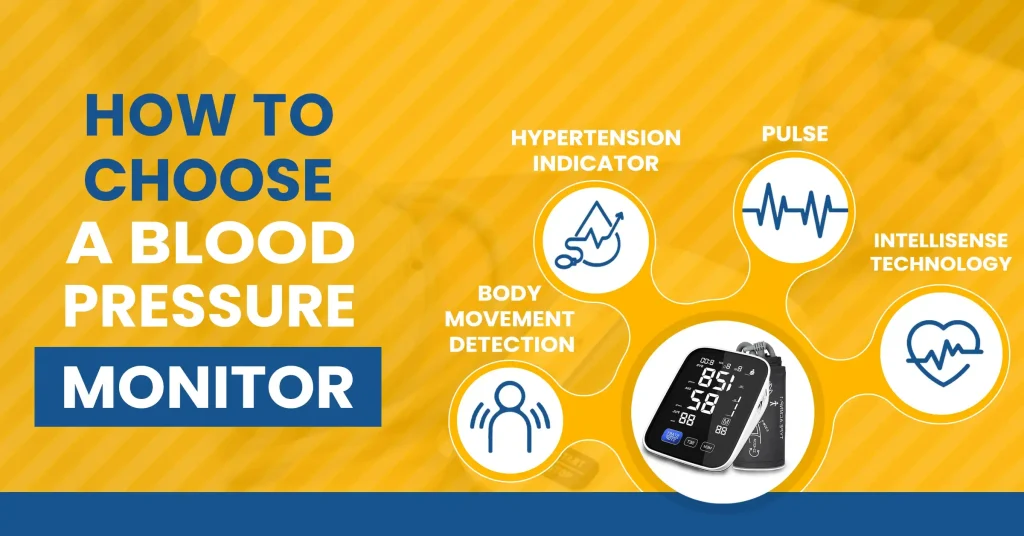
Checking your blood pressure at home is vital. It empowers you to manage your heart health. But selecting a blood pressure monitor is really a difficult task. This guide will clearly tell you how to choose and what to choose.
In this article we will focus on cuff size, accuracy, and smart features. Our advice helps you find a reliable partner for your health journey. Let us find the perfect fit for your needs.
Why Choosing the Right Blood Pressure Monitor Matters
Your home monitor provides crucial health data. Inaccurate readings lead to unnecessary worry. They can also mask a real problem. A good monitor offers peace of mind. It helps you and your doctor make informed decisions. Think of it as your personal health sentinel. It guards your wellbeing every single day.
Types of Blood Pressure Monitors
Not all monitors work the same way. Your lifestyle and needs determine the best type. Understanding the options is the first step. Let us explore the main categories available today.
Upper Arm Blood Pressure Monitors
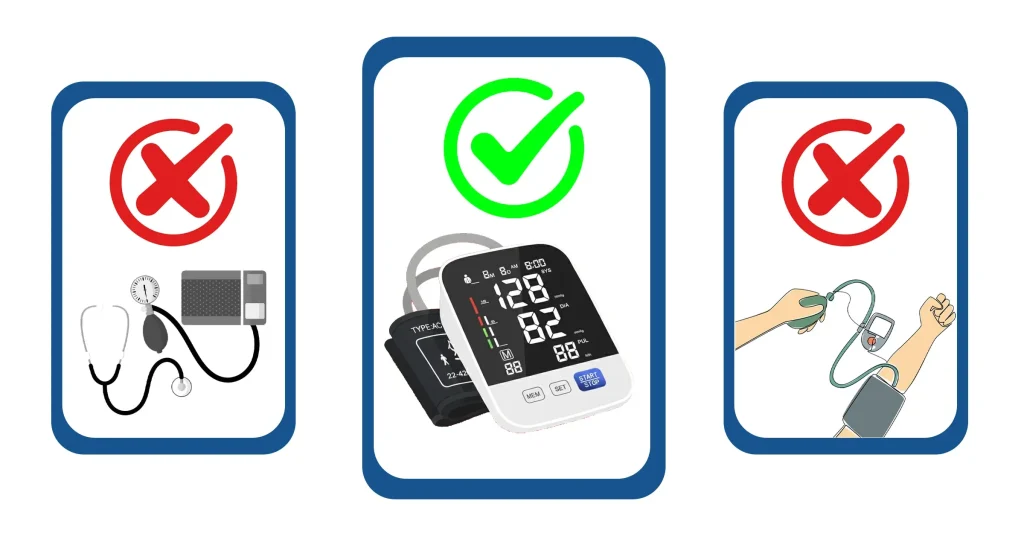
Such bp machines are the gold standard for home use. They measure pressure at your brachial artery. This position aligns with your heart. Doctors usually recommend this type.
- They generally provide the most consistent readings.
- They are preferred for clinical accuracy at home.
- They require proper cuff fit for correct results.
Wrist Blood Pressure Monitors
These devices offer portability and convenience. They are compact and easy to use on the go. However they need very precise positioning.
- Your wrist must be at heart level during measurement.
- They can be less accurate if positioning is wrong.
- They suit travelers or those with very large arms.
Manual vs Digital Monitors
Manual models use a stethoscope and inflatable cuff. They require training and good hearing. Digital models automate inflation and reading.
- Digital monitors are user-friendly for most people.
- They display readings clearly on a screen.
- Manual versions are rarely used at home now.
How to Choose the Correct Cuff Size
Cuff size is critical for accuracy. A wrong size gives faulty readings. This is a common mistake. Measure your arm before buying.
First find your mid-upper arm circumference. Use a soft measuring tape. Place it midway between your elbow and shoulder. Note the length in centimeters. Then check the monitor’s cuff range. Most brands offer small, standard, and large cuffs. The cuff bladder should encircle eighty percent of your arm. A perfect fit feels snug but not tight.
Accuracy Standards to Look For
Trustworthy readings are non-negotiable. Look for key validation seals on the box. These prove the device passed rigorous tests.
Seek monitors validated by the AHA or the ESH. The FDA clearance is another good sign. Avoid unvalidated models from unknown brands. Remember even validated devices need proper use. Check your technique regularly for best results.
Memory and Data Tracking Features
Modern monitors do more than take a reading. They help you track trends over time. Memory features turn data into insight.
Consider monitors with multi-user memory. They allow two people to store readings separately. Some connect to smartphone apps via Bluetooth. These apps create graphs and share data with doctors. Look for averaging functions too. They calculate your average pressure over time. This gives a clearer picture than a single number.
Conclusion
Choosing a blood pressure monitor demands care. Prioritize a proper cuff fit above all else. Seek devices with recognized accuracy validation. Embrace helpful memory and tracking tools. Your health deserves this thoughtful investment. A good monitor becomes a trusted friend. It supports a healthier more informed life.
FAQs
Upper arm monitors are typically the most accurate.
The cuff bladder should wrap around eighty percent of your arm.
They can be if used perfectly at heart level but upper arm is preferred.
Check it against your doctor’s device at least once every two years.
No but it helps track trends easily on your phone.
Yes choose a model with separate memory for two users.
This is common due to white coat syndrome or different equipment.
Not always but validated mid-range models often offer great value.
It’s a feature of blood pressure monitor. It can signal an irregular heartbeat during measurement.
Medical supply stores or trustworthy online platforms are best.
Yes, your arm must always be supported at heart level.
Yes, remain still and quiet for the most accurate result.