
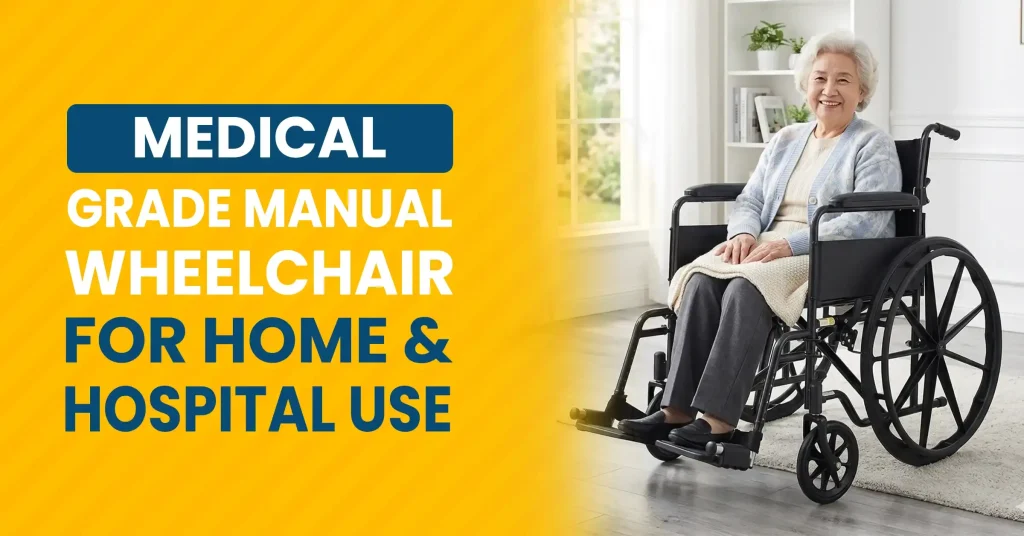
The Quiet Shift in Personal Mobility
Walk into any medical supply store today. You will see rows of manual wheelchairs. They look similar at first glance. But the differences run deep. The market for personal mobility devices in the United States hit nearly $15 billion in 2025 . More families now face decisions about mobility equipment. They want chairs that work well at home and in hospitals.
A manual wheelchair serves one purpose. It provides mobility for people who cannot walk . That sounds simple. But the right chair changes everything about daily life. It affects how someone moves through their home. This changes how caregivers offer help. It shapes trips to the store or visits with family.
This guide walks through what matters most. We will look at features. We will discuss fit. And will cover what makes a chair work for real people in real spaces.
What Makes a Wheelchair Medical Grade?
Medical grade means something specific. These chairs meet strict standards. They pass tests for stability and strength . Manufacturers follow FDA requirements. The materials hold up over time.
Standard wheelchairs work for short periods. Medical grade chairs handle daily use. They support people for years rather than weeks. The frames resist wear. The brakes stay reliable. The upholstery cleans easily and stands up to repeated use .
Key features of medical grade chairs:
- Frames tested for static, impact, and fatigue strength
- Brakes that meet ISO effectiveness standards
- Materials that pass biocompatibility tests
- Designs that support proper posture
- Components that adjust as needs change
Home Use Versus Hospital Use
The setting matters more than most people think. Homes have narrow doorways. Hospitals have wide halls. Homes have carpets. Hospitals have tile floors.
For Home Use
Homes present real challenges. Hallways run tight. Doorways measure standard sizes but furniture blocks paths. Bathrooms pose the biggest test. Turning around in a small space requires skill from both chair and user.
A home manual wheelchair needs maneuverability. It should turn easily in compact areas. The width must clear door frames without scraping. Seat height should match bed and toilet levels for smooth transfers .
Storage becomes another factor. Many families own vehicles that cannot fit bulky chairs. A chair that folds quickly solves this problem . It slides into trunks or back seats. It leans against walls without taking whole rooms.
For Hospital Use
Hospitals demand different things. Floors stay smooth. Hallways stay wide. Elevators move people between floors.
Hospital chairs endure constant use. Different people sit in them daily. They get pushed fast down halls. They wait in corners for hours. And must clean easily between patients .
These chairs need strong brakes. Attendants push them more than users propel them. Handles should sit at comfortable heights for staff. Wheels should roll straight without constant correction.
Weight Matters More Than You Think
Weight affects everything. Chair weight. User weight. Both matter.
Lightweight chairs weigh around 15 to 20 pounds . These work well for people who travel. They lift into cars easily. They push across carpets with less effort. Caregivers appreciate not straining their backs.
Heavy duty chairs support more weight. Bariatric options exist for larger body types . These chairs use reinforced frames. They provide wider seats. They maintain stability under higher loads.
The right chair matches the user’s body. Seat width should allow slight movement without sliding. Depth should support thighs fully without pressing behind knees .
Self-Propelled Versus Attendant-Propelled
Who pushes the chair changes everything.
Self-Propelled Chairs
These have large rear wheels with hand rims . Users grab the rims and push. This builds upper body strength. It provides independence. The user decides when and where to move.
Self-propulsion requires arm strength and endurance. Shoulders take the load. Some users develop overuse injuries over time. Proper fit reduces this risk. The axle should position slightly forward. This puts the shoulder in a better mechanical position for pushing.
Attendant-Propelled Chairs
These have smaller rear wheels. Someone else pushes from behind . Handles extend from the back. The caregiver controls movement.
These chairs work well for hospital transport. They suit users who cannot use their arms. They help during recovery periods when strength is low.
Some chairs work both ways. Large wheels in back. Push handles available. The user decides day by day who moves the chair.
Fit Changes Everything
A poorly fitted chair causes problems. Pressure sores develop. Shoulders hurt. Transfers become dangerous.
Seat width stands as the starting point. Measure the widest point across hips or thighs. Add one inch on each side for clothing and movement. Too wide causes leaning. Too narrow causes pressure.
Seat depth matters just as much. Measure from back of hip to back of knee. Subtract about two inches. This prevents the seat edge from pressing into leg veins.
Back height depends on support needs. Lower backs allow more movement for self-propulsion. Higher backs provide more trunk support .
Footrests should support feet comfortably. Knees bend at about 90 degrees. Feet rest flat on the foot plates. This position distributes weight properly.
Materials and Construction
Frames come in different materials. Steel chairs cost less. They weigh more. They last practically forever.
Aluminum chairs weigh less. They cost more. They resist rust and work well for most daily users.
Titanium sits at the top. Very light. Very strong. Much expensive. Serious long-term users often prefer titanium.
Upholstery needs to breathe. Nylon works well . It cleans easily. It dries fast. Also, it holds up to daily use. Vinyl also cleans well but can get sweaty in warm weather.
Wheels deserve attention. Pneumatic tires provide cushion. They absorb bumps. They can go flat. Solid tires never go flat. They ride harder. The choice depends on where the chair gets used most .
Practical Features That Matter
Small features make big differences.
Armrests. Full-length arms support the whole forearm. Desk-length arms slide under tables. Removable arms make side transfers easier .
Leg rests. Swing-away designs let feet get closer to beds and chairs. Elevating legs help with swelling or positioning needs .
Brakes. They must hold firmly on slopes. They should reach easily from a seated position. Attendant brakes should lock and release without bending.
Anti-tippers. Small wheels near the ground. They prevent tipping backward on slopes or during transfers . Good for new users or homes with ramps.
Seat belts. Not just for vehicles. They help with posture and safety during movement .
Insurance and Coverage
Most insurance covers manual wheelchairs. But they require documentation.
A physician must write an assessment. It should show why other devices like canes or walkers will not work . It must explain how the chair will get used at home.
The home environment must support manual wheelchair use. Narrow doors or steps can block approval. Some insurers require home assessments first.
Coverage varies by chair type. Standard wheelchairs get covered most easily. Lightweight chairs need proof that standard ones will not work . Heavy duty chairs need documentation about body size.
Medicare uses specific codes for different chairs. K0001 covers standard wheelchairs. K0004 covers high-strength lightweight models . Your provider should know these codes.
Trying Before Buying
Sitting in a chair for five minutes tells you little. Living with a chair tells you everything.
Test these things before deciding:
- Push across carpet and tile
- Turn in a bathroom or small bedroom
- Reach items from counters and shelves
- Transfer in and out with help
- Fold and lift into your vehicle
Many dealers let you try chairs at home. Take advantage of this. A chair that feels fine in a store may feel wrong in your space.
Maintenance Keeps Chairs Working
Chairs need care. Simple care extends life.
Check tire pressure weekly for pneumatic tires. Look for wear on treads. Clean wheels and casters of hair and debris. Tighten loose bolts when you find them.
Wipe down upholstery with mild soap and water. Check for tears or worn spots. Replace cushions before they lose support.
Brakes need occasional adjustment. They should engage fully with reasonable pressure. Loose brakes cause accidents.
Most repairs need professionals. But daily cleaning prevents bigger problems.
Recent Trends in Mobility Equipment
The market keeps changing. New materials make chairs lighter. Better designs improve stability .
Manufacturers focus on adjustability. Chairs now adapt more to individual bodies. Seat depths change. Back angles adjust. Axle positions move.
Colors have expanded beyond hospital beige. Users want chairs that reflect personality. Black frames. Blue upholstery. Red spokes . Small touches make medical equipment feel more personal.
Online shopping has grown. But most experts still recommend in-person fitting. Bodies vary too much for one-size-fits-all ordering.
Making Your Choice
Pick the chair for how you live. Not for how you wish you lived. Not for occasional trips. For daily reality.
Think about who will push most days. Think about where you go most often. And think about how the chair gets stored at night.
Ask others who use chairs. They know things salespeople miss. They can tell you about real-world problems and solutions.
The right chair fades into the background. It supports without demanding attention. It enables activity without causing pain. Also, it fits your life like a good pair of shoes fits your feet.
FAQs
What is the difference between a transport chair and a manual wheelchair?
Transport chairs have four small wheels and require an attendant to push. Manual wheelchairs have large rear wheels that allow self-propulsion .
How do I know what size wheelchair I need?
Measure seat width across your hips and add two inches. Measure seat depth from hip to knee and subtract two inches. Work with a provider to confirm fit.
Does Medicare pay for manual wheelchairs?
Yes, when medically necessary. A physician must document need and home environment must support use .
How much does a good manual wheelchair cost?
Quality chairs range from 150 for basic models to several thousand for lightweight custom chairs. Insurance often covers part of the cost.
What weight capacity do manual wheelchairs have?
Standard chairs typically support 250 to 300 pounds. Heavy duty options support more .
How long do manual wheelchairs last?
With proper care, five to ten years. Frames last longer than upholstery and tires.
Can I take a manual wheelchair on an airplane?
Yes. Airlines check wheelchairs at the gate. Consider a lightweight folding model for easier travel .
What maintenance does a wheelchair need?
Check tire pressure weekly. Clean casters of debris. Tighten loose bolts. Replace worn cushions .
Are lightweight wheelchairs worth the extra cost?
For daily users, yes. Less effort to push. Easier to lift. Better for shoulders long-term .
How do I clean wheelchair upholstery?
Use mild soap and water. Avoid harsh chemicals. Dry thoroughly to prevent mildew.
What is a hemi-height wheelchair?
A chair with a lower seat height. Helps people who use their feet to help move .
Can I add accessories to my wheelchair?
Yes. Cushions, bags, cup holders, and trays all work with most chairs .
How often should I replace wheelchair cushions?
Every one to three years. Replace sooner if cushion no longer provides support.
What is tilt-in-space?
The whole seat tilts while keeping the same seat angle. Helps with pressure relief and positioning .
Do I need a prescription for a manual wheelchair?
Insurance requires one. Cash purchases may not, but professional fitting still helps.
