
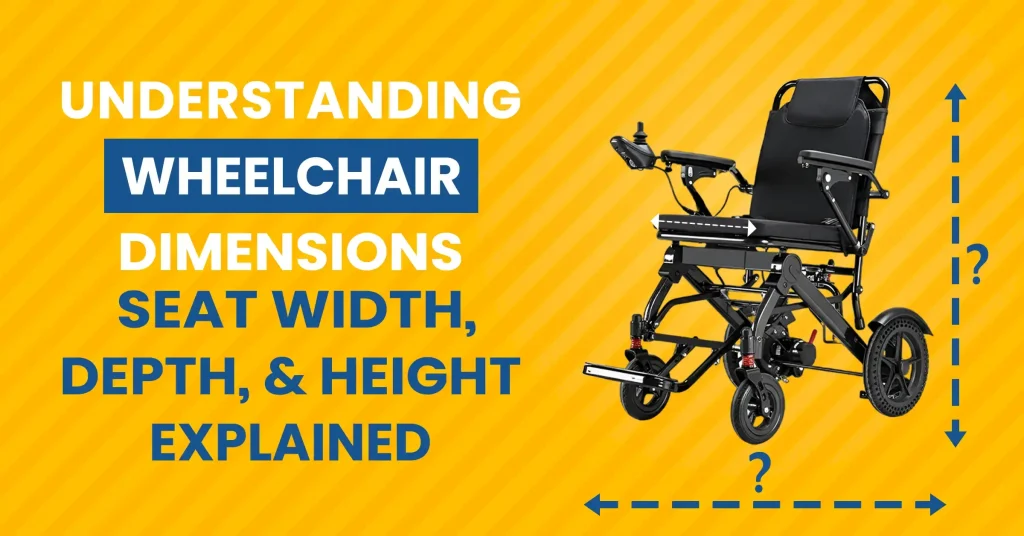
Choosing a wheelchair is a significant decision. Wheelchair dimensions dictate your daily experience. Correct measurements ensure comfort and preserve health. Ignoring them leads to pain and complications. This guide explains seat width, depth, and height. You will learn their profound individual importance. We provide clear steps for accurate measurement. Your journey toward better mobility starts here.
Why Wheelchair Dimensions Are Crucial for Comfort and Health
A wheelchair must be a natural extension of you. Perfect proportions prevent physical distress and injury. They form the foundation of your daily independence. Consider dimensions your personal blueprint for support.
Safeguarding Against Skin Breakdown
Pressure sores are a serious and common risk. An improperly sized seat creates uneven pressure. This constant stress damages skin and tissue. A thin seat squeezes hips and thighs. A too-wide seat forces postural leaning. Both scenarios threaten your skin integrity.
Promoting Sustainable Postural Alignment
Your spinal health depends on proper support. Correct dimensions maintain a neutral pelvic position. This alignment reduces strain on back muscles. It also optimizes breathing and organ function. Good posture prevents chronic pain over years.
Enabling Efficient and Safe Mobility
Every movement relies on your chair’s fit. Proper seat height allows optimal arm positioning. This makes wheel propulsion easier on joints. Correct depth facilitates smooth sit-to-stand transfers. Your confidence grows with each stable movement.
Decoding the Three Essential Measurements
Master these three measurements for a perfect fit. Each one serves a distinct and vital purpose.
Seat Width: The Anchor of Stability
Start with measuring the widest part of your hips or thighs. Add roughly one inch for clothing clearance. This space prevents friction on your sides. Excessive width forces your arms to overreach. This strains shoulders and makes steering clumsy. Insufficient width causes and discomfort.
- Usual adult sizes range from 16 to 20 inches.
- Avoid ordering excessive width for perceived comfort.
- Test for a snug but not tight fit.
Seat Depth: The Foundation for Support
This supports your full thigh without hindering knees. Measure from your back to the inside knee bend. Subtract about two inches from this number. Ideal depth evenly distributes your body weight. Excessive depth presses into the popliteal space. This can restrict blood flow in your legs. Insufficient depth leaves thighs unsupported and unstable.
Seat Height: The Driver of Function
This determines your relationship to the world. Measure from your heel to the knee bend. The result guides footrest placement. Your feet must rest flat. Knees should be level with hips. This height affects table access and propulsion power.
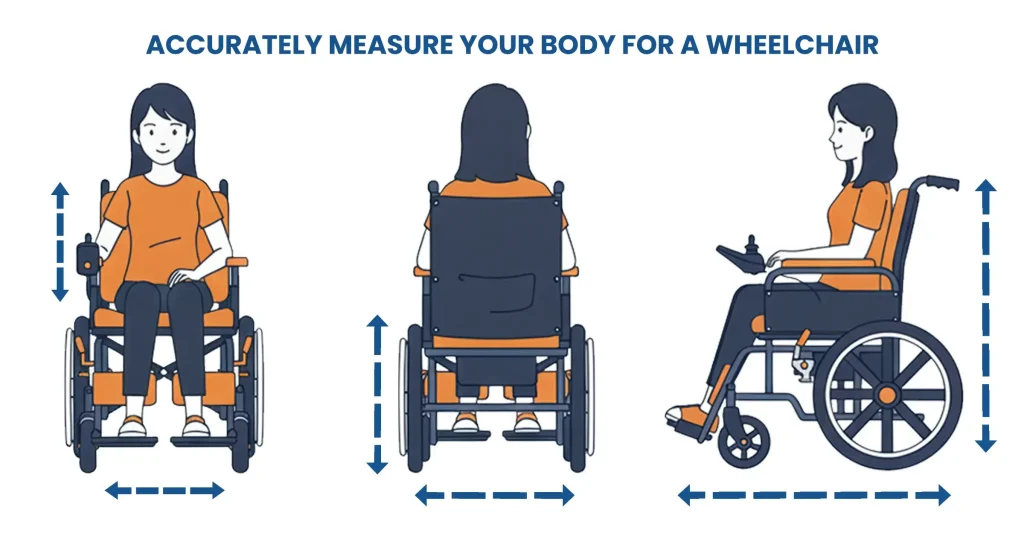
How to Accurately Measure Your Body for a Wheelchair
Work with precision while measuring a wheelchair. Gather a cloth tape measure and a firm chair. Sit upright in your regular clothing. Enlist a friend for the most reliable numbers.
Conquering the Seat Width Measurement
Sit on a solid surface like a dining chair. Place the tape across your hips at their fullest point. Keep the tape parallel with the floor for truth. Note the number and add one single inch. This is your ideal seat width measurement.
Mastering the Seat Depth Measurement
Sit with your back firmly against a wall. Ensure your feet are flat on the floor. Locate the bend behind your knee with your hand. Measure from the wall directly to this point. Deduct two inches to find your perfect seat depth.
Determining the Correct Seat Height
Remain seated in the same upright way. Measure from your heel to upward. Stop at the point underneath your knee bend. This is your critical lower leg length. Discuss overall chair height with a specialist. They will factor in cushion thickness and footrests.
- Perform each measurement three separate times.
- Use the average number for greatest accuracy.
- Wear your everyday shoes during the process.
- Record all numbers in a permanent notebook.
Putting It All Together: The Impact of Proper Dimensions
The synergy of correct measurements changes everything. Your wheelchair becomes a partner, not a burden.
Transforming Daily Navigation and Energy
A chair that fits moves with intuitive ease. You expend less energy on basic maneuvers. More strength remains for tasks you enjoy. Your world feels more accessible and welcoming.
Investing In Long-Term Physical Preservation
This is a critical investment in your future self. Proper fit manages pressure before problems start. It protects your joints from repetitive strain injuries. You actively maintain your mobility and comfort.
Cultivating Confidence and Autonomy
The psychological lift is undeniable. Security in your equipment fosters boldness. You engage more freely in community and work. This subtle confidence reshapes your daily experience.
Conclusion
Wheelchair dimensions are the pillars of your mobility. They directly influence your health and daily joy. Do not neglect its importance. Consider accuracy during the measurement phase. Seek expert advice from a therapist. Embrace the process for a better quality of life.
FAQs
18 inches is the most standard width for adults.
Too deep restricts circulation behind your knees.
Yes it creates high pressure points on hips.
Measure from your heel to your knee bend while seated.
Thighs are fully supported without knee contact.
Even weight distribution avoids concentrated pressure points.
No extra width can cause instability and shoulder pain.
Consider it after significant weight change or postural shift.
Occupational therapists are specially trained for fittings.
They feature wider seats and higher weight capacities for larger individuals.
Correct width is crucial for navigating doorways and tight spaces.
Medical supply brands and hospital websites usually provide guides.
They ensure measurements account for posture and medical needs.