
Walking aids offer immediate stability. Yet lasting confidence arises from personal strength. Deliberate movement builds this foundation securely. Your walker transforms into a support tool. Walkers improve balance and safety. This guide presents five essential exercises. They are designed specifically for walker users. Begin your journey toward steadier steps today.
Why Balance Training With Your Walker Works
A walker assists movement but muscles must engage. Targeted exercises prevent strength from declining. They enhance stability during every single step. Stronger legs and core improve overall posture. This reduces effort needed for daily tasks. Consistent practice also lowers potential fall risk. View your walker as a reliable training partner. It supports your path to greater independence.
Important Safety Preparation
- Secure approval from your physical therapist.
- Perform exercises on a flat surface.
- Lock the wheels before exercise.
- Wear non-slip supportive footwear.
- Position a chair nearby for immediate support.
1. Supported Weight Shifts: Foundation of Stability
This exercise builds crucial weight control awareness. It trains the subtle balance used in walking. Stand very next to your walker. Hold both handles firmly. Place your feet 4-5 inches apart for a solid base. Maintain a gentle bend in your knees.
How to Perform the Movement
Shift your weight slowly over to your right foot. Gently lift just your left heel from the floor. Stay steady in this stance for a slow count of three. You should feel the muscles in your right leg working to hold you.
Then smoothly return your weight to the center. Repeat the movement toward your left side. Complete five shifts per side as a starting goal.
- Prioritize control & precision over speed.
- Keep your torso upright without leaning on the walker.
- Breathe normally throughout the session.
- Gradually increase the hold duration as you improve.
2. Walker-Assisted Heel Raises: Strengthen Calves
Strong calf muscles propel you forward safely. This exercise develops that necessary power. Position yourself inside the walker facing forward. Grip the handles comfortably with both hands. Stay on your feet flat on the floor.
Executing the Lift
Press down lightly on the handles for assistance. Slowly raise both heels off the ground together. Rise up onto the balls of your feet. Squeeze your calf muscles at the highest point. Hold briefly then lower with complete control. Aim for one set of eight to ten repetitions.
3. Supported Side Leg Lifts: Boost Hip Stability
Hip strength directly influences your walking pattern. This movement targets those vital stability muscles. Stand centered in your walker holding the handles. Distribute your weight evenly across both feet.
Completing the Exercise
Lift your right leg straight out to your side. Keep your toes facing forward and posture tall. Avoid tilting your body; use your hip muscles. Hold the lifted position for two full seconds. Lower the leg back down with mindful control. Perform eight lifts per leg during your session.
4. Seated Walker March: Coordination and Core
Remain seated for this safe cardio and core activity. Place your walker directly in front of your chair. Sit upright with your back supported comfortably.
The Marching Motion
Hold the walker’s front bar or sides lightly. Lift your right knee upward as high as manageable. Lower it and immediately lift the left knee. Continue alternating in a steady marching rhythm. Target twenty total marches to begin. This warms the body and promotes better circulation.
- Maintain tall posture throughout the activity.
- Use this exercise as a warm-up routine.
- Increase pace gradually as your coordination builds.
5. Controlled Backward Stepping: Dynamic Challenge
Moving backward trains different coordination skills. It significantly challenges your balance systems. Ensure you have a clear, safe path behind you. Stand inside your walker on a secure surface.
Performing the Steps
Hold the walker handles with a firm yet relaxed grip. Step backward slowly with your right foot. Lightly touch the floor with your toe first. Then carefully place your whole foot down. Shift some weight onto that back foot. Bring your left foot back to meet it. Complete three to five steps then rest.
Integrating Exercises Into Daily Life
Try to be consistent in these exercises. You can perform seated marches and heel raises during the daily tasks. Short frequent practice yields the best results. Celebrate small improvements in your strength and steadiness. This commitment is your investment in personal freedom.
Conclusion
Your walker provides more than just mobility support. It enables a proactive approach to building balance. These five exercises offer a clear and safe plan. Begin with professional guidance. Regular practice can improve strength and confidence. Take control of your stability and reclaim your independence.
FAQs
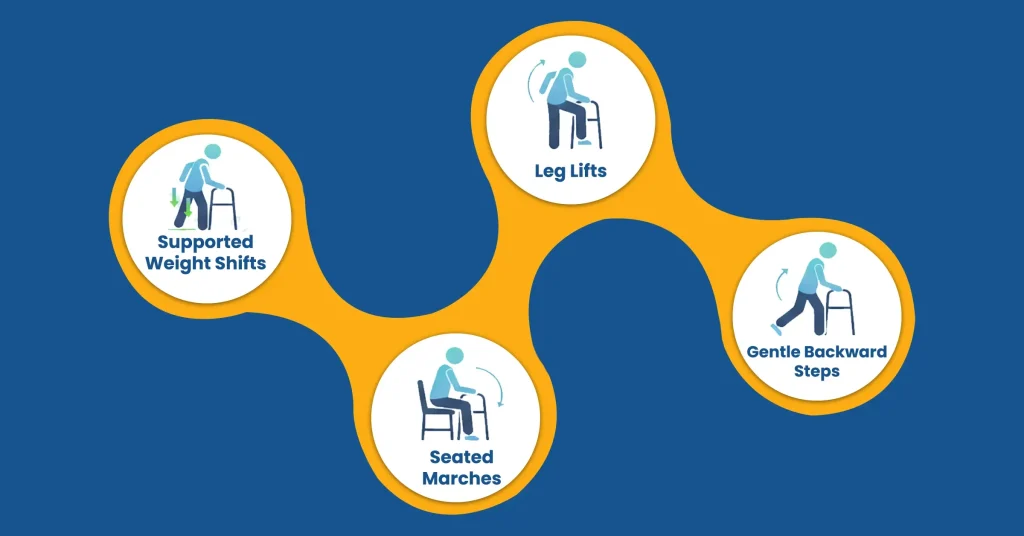
The best balance exercises with a walker include supported weight shifts, heel raises, leg lifts, seated marches, and gentle backward steps.
Yes, Ensure the wheels are locked on a flat surface before starting.
Aim for short sessions, about 10-15 minutes, most days of the week.
Yes, when they’re performed with safety precautions and professional approval.
Absolutely, They build the strength and control. These factors will lead you toward independence.
A standard or rollator walker is ideal. It provides stability so you can focus on building leg strength with confidence.
A rollator walker is best for this purpose. It offers balance and support. Also makes mobility easier for you.
A walker with a seat is excellent. It supports safe movement while allowing for seated strength exercises.