
A walking stick provides basic support and confidence. Yet many users compromise their safety unintentionally. Simple errors can reduce stability and cause discomfort. This guide highlights frequent missteps. You will learn practical methods for correction. Proper use transforms your walking cane from a simple prop. It becomes a true partner for secure mobility.
Mistakes That Should Avoid While Using Walking Stick
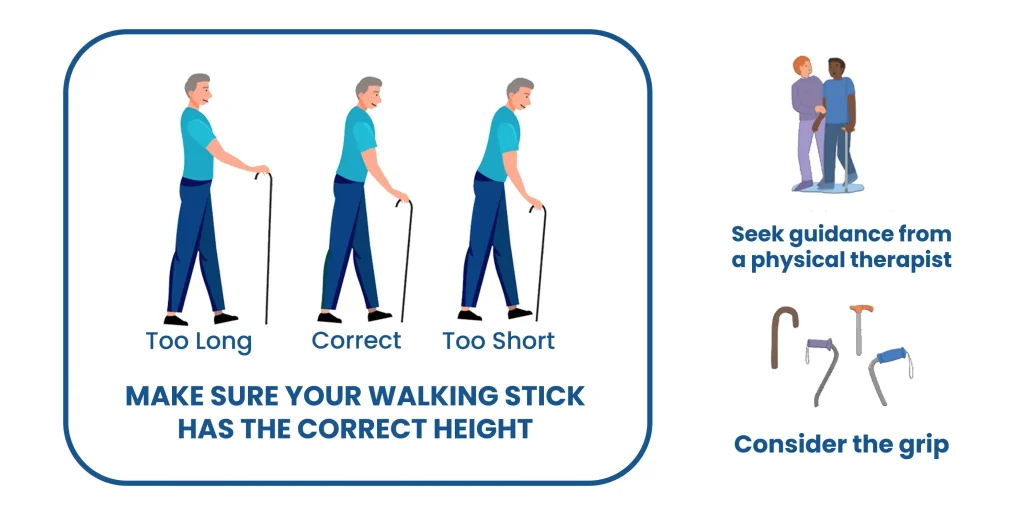
Using the wrong height is a fundamental error. A stick that is too tall strains your shoulder. One that is too low forces a slouch. Both scenarios disrupt your natural posture. This mistake often causes back or wrist pain. It also diminishes the stick’s stabilizing benefit.
Correcting Walking Stick Height
Stand upright with your shoes on. Let your arms hang loosely at your sides. Make sure aligning the stick handle with your wrist crease. Your elbow will bend slightly when holding it. This position offers optimal support and control.
Grip the handle correctly
Gripping the handle incorrectly is another common fault. A poor grip feels uncomfortable quickly. It transfers pressure to sensitive joints. This can lead to hand fatigue or pain. The correct grip feels secure and natural. It should not cause you to clench your fingers tightly.
Key Mistakes to Avoid for Stability
Many people place their walking stick on the wrong side. This error drastically reduces its effectiveness. Your stick should go in the hand opposite your weaker leg. Move the stick forward with that weaker limb. This technique creates a stable, supportive tripod with your legs. It balances your body weight more evenly.
The Sequence for Safe Movement
First, advance your walking stick and weaker leg together. Then step forward with your stronger leg. This rhythmic pattern provides constant support. Practice this sequence slowly at home. It will soon become an automatic habit.
- Use the “opposite hand, opposite leg” rule as your mantra.
- Practice near a wall or counter for initial support.
- Focus on a smooth, coordinated motion without rushing.
- Video yourself walking to check your form.
Relying on an outdated or worn stick is risky. A walking stick for elderly users experiences regular stress. Inspect the rubber tip monthly for cracks or smoothness. A worn tip loses traction especially on wet floors. Also check the shaft for deep scratches or bends. Compromised equipment can fail when you need it most.
Walking Stick Safety and Maintenance Oversights
Ignoring your environment is a critical safety lapse. Different surfaces demand specific attention. A walking stick with four legs offers broad support. Yet it can trip you on thick carpets or thresholds. Assess each new surface before stepping. Move cautiously on wet tiles or loose gravel.
Navigating Different Areas
On stairs, take support of handrail if available. Hold the rail with one hand and the stick in another. Remember “up with the good, down with the bad.” Step up with your stronger leg. And step down with your weaker leg and cane together. Take each step individually for maximum safety.
Choosing the wrong type of stick undermines your goals. A standard cane might not suffice for poor balance. Walking sticks for balance often have a broader base. A quad cane offers more stability for standing still. Discuss your mobility condition with a healthcare provider. They can recommend the ideal mobility aid for your specific needs.
- For outdoor use, select a stick with a stable base.
- For primarily indoor mobility, a rubber tip is safer.
- Consider a folding model for travel and storage convenience.
- Ensure the handle shape fits your hand comfortably for long periods.
Cultivating Confidence Through Correct Use
Rushing your movements forfeits the stick’s primary benefit. Speed often sacrifices stability. Move with deliberate and mindful steps. Let the cane bear its share of your weight properly. This measured pace prevents stumbling and builds real confidence. Your walking stick for seniors should enable calm assurance not haste.
Neglecting professional guidance is perhaps the biggest mistake. A physiotherapist provides personalized training. They assess your gait and strength precisely. Their advice ensures you leverage the tool effectively. This expertise helps you avoid developing bad habits. It transforms simple use into skilled technique.
Conclusion
Your walking stick is a powerful aid for independence. Avoiding these common mistakes maximizes its potential. Correct height and grip form the foundation. Proper movement patterns ensure daily safety. Regular maintenance keeps the aid reliable.
Correct posture and stick height ensures safety. Also don’t forget to choose the mobility aid according to your strength and mobility needs. Embrace these practices to walk with greater assurance and comfort.
FAQs
The handle should align with your wrist crease when your arm is relaxed.
No. Use it in the hand opposite your weaker leg for better balance.
Inspect it monthly and replace it when worn smooth or cracked.
It might if the height is wrong or your grip is incorrect. Adjusting these often helps.
Often yes. A walking stick with four legs provides a broader, more stable base of support.